ep.3: saltbush sweetbreads and macadamia romesco for Angie Faye Martin
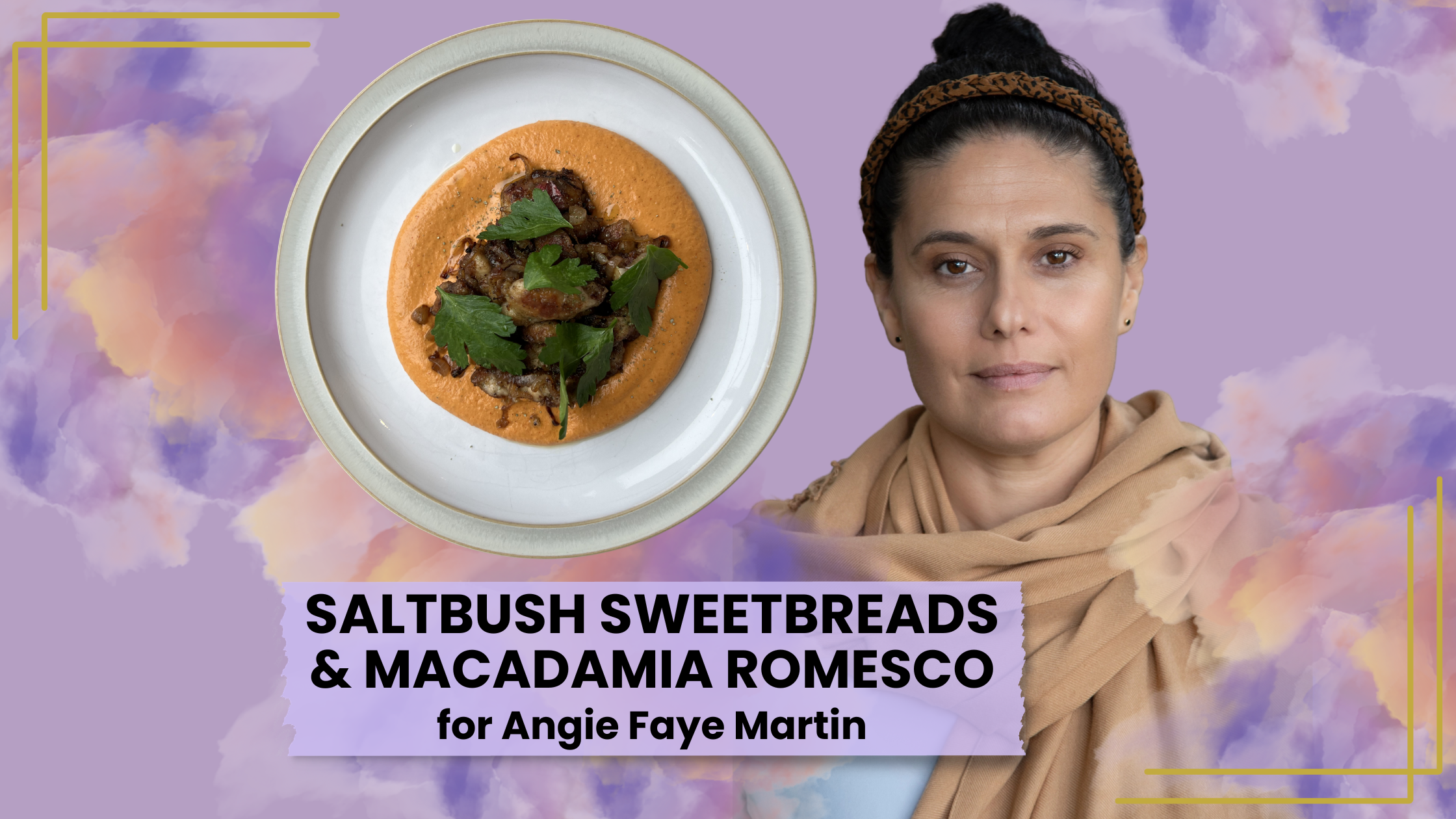
a slightly boujee take on sweetbreads for a 2026 audience
serves: 2
prep time: 30 mins + 8 hrs in fridge
cooking time: 45 mins
there’s a passage in Angie’s book Melaleuca where she describes the kinds of dishes eaten on the yumba (the camp ground where indigenous families lived) in the fictitious southern Queensland town of Goorungah, where her story is set. ranging from “roo tail cooked over red hot coals” to “native berries”, my eye was caught by the line “and any kind of cheap offal from the nearby kill sheds”. though a fan of it, i’ve rarely cooked offal, and thought this could be a great opportunity to have a go at something I’ve long been a fan of but never cooked: sweetbreads.
sweetbreads are the rather more sanitary term for either the thymus gland or pancreas, usually taken from lambs or calves. unlike other offal, sweetbreads don’t have a particularly “offally” flavour and have a firm, slightly creamy texture, and is particularly good when pan fried. for Angie’s dish, I decided to pair lamb sweetbreads with a macadamia nut romesco sauce — traditionally made with almonds — and season with saltbush powder. both macadamias and saltbush are australian “bush food” (native food), and saltbush is (as the name would suggest) an alternative to salt, with a slightly earthy, grassy flavour. the pan-fried sweetbreads are then tossed with some lightly caramelised shallots and marsala wine, finished with a squeeze of lemon juice, and garnished with flat-leaf parsley and a drizzle of olive oil at the end to brighten everything up.
obviously, this is a bit of a chef-ified take on sweetbreads and not what they would’ve eaten on the yumba — certainly not with shallots and marsala wine! instead, they would’ve simply boiled everything (likely for a few hours), perhaps with a few root vegetables such as carrots and potatoes. while i could’ve gone in that direction, ultimately i decided not to as all of these dishes are a) inspired by our guests and their work but not necessarily faithful recreations, and b) the section of the book i took inspiration from was set in 1965, and since we exist in 2026, i could afford a little modernisation to make a dish anyone could enjoy today.
the trickiest bit in this recipe is dealing with the membrane and sinew around the sweetbreads, which — if left on — makes them a little chewy. i tested pan frying from raw and from poached and found that, while the texture is marginally more tender from raw, poaching first is by far a better method to remove the membrane.
if offal is a bit of a stretch for your tastebuds (though they’re an excellent source of protein and highly nutritious), i’d encourage you to still make the macadamia romesco — it’ll pair beautifully with a steak or some firm white fish (or chargrilled vegetables, yum) — and get hold of some milled saltbush for seasoning. it has a subtle flavour and saltiness, but it’s a great way to add some bush food into your diet! (i got mine from the kakadu plum co.)
SPECIAL EQUIPMENT
food processor or blender
medium saucepan
cast-iron skillet or frying pan
INGREDIENTS
for the macadamia romesco:
60g raw macadamia nuts
1 large red capsicum
1 long red chilli
1 head garlic, split in half along the meridian, each half drizzled with neutral oil, and wrapped in foil
2 large tomatoes, halved and deseeded
1 tbsp sherry vinegar
1 tbsp paprika
45 ml neutral oil
sea salt and freshly ground black pepper, to taste
for the saltbush sweetbreads:
140g lamb sweetbreads, as much sinew removed as possible
milk (for soaking)
water + 1 tsp salt + 1 bay leaf + 1 tbsp peppercorns (for poaching)
plain flour, seasoned with salt and pepper (to coat)
15g + 10g unsalted butter, separated
4 shallots, finely sliced
saltbush powder, to taste
sea salt, to taste
freshly ground black pepper, to taste
1–2 tbsp dry sherry (eg, Spanish Oloroso)
flat leaf parsley (for garnish)
extra virgin olive oil (for finishing)
1/4 lemon (for finishing)
METHOD
for the macadamia romesco:
preheat oven to 180ºC.
roast macadamia nuts in preheated oven for 10 mins on a tray, or until golden brown (be careful not to burn). set aside.
place capsicum, chilli, garlic head, and tomatoes on tray and roast for 30 mins.
remove the chilli and garlic, and roast capsicum and tomatoes for a further 15 mins, until the capsicum skin has blistered and is browning.
set aside and allow to cool slightly, then remove skin and seeds from capsicum and skin from tomatoes.
place all ingredients in food processor or blender and blitz until smooth. season to taste with sea salt and freshly ground black pepper. set aside.
for the saltbush sweetbreads:
cover prepared sweetbreads with milk, clingfilm, and refrigerate overnight or for around 8 hrs — this will remove any bitterness and help tenderise the sweetbreads.
place the poaching ingredients in a saucepan of water and bring to the boil, then drop sweetbreads in and reduce to a simmer, gently poaching for 5 mins. remove to an ice bath until completely cool, then peel away as much of the remaining membrane as possible.
drain, patting dry with paper towel, and cut sweetbreads into bite-sized pieces. dust in seasoned flour.
place a cast-iron skillet or large frying pan over medium-high heat and melt 15g unsalted butter, swirling around the pan to cover, then add the floured sweetbread pieces. sprinkle with sea salt, saltbush powder, and freshly ground black pepper and, when one side is browned, turn. when all sides are browned (around 5 mins or so), remove from the pan and set aside.
add another 10g unsalted butter to the pan, the sliced shallots, a large pinch of sea salt and freshly ground black pepper, and sauté until onions are softened and browned (about 10–15 mins).
deglaze with 1–2 tbsp marsala wine, continuing to sauté until the onions are a little sticky, then return the sweetbreads to the pan, mixing well, and finish with a squeeze of lemon juice.
serve hot with the romesco sauce, drizzled with olive oil, and garnished with saltbush powder and flat leaf parsley.
NOTES
be sure to pat dry and dust your sweetbread pieces with flour well (shaking off excess), as this is what will help them form a crust when frying
the romesco sauce recipe will make more than you need but it keeps really well and can be paired with so many different dishes. store it in an airtight container in the fridge for up to a week, or freeze for up to a month
romesco sauce recipe developed from this recipe from australian macadamias
sweetbreads recipe developed from this recipe from serious eats and this recipe from offaly good cooking